
BUET’s Private Cloud for Learning, Experimentation, and Innovation
Client: Global Brand PLC
Program Authority: Bangladesh University of Engineering and Technology (BUET)
Project Duration: July 2025 to December 2025
Project Summary
- Private Cloud Deployment
- Infrastructure Provisioning
- Backup
- L2/L3 support
Cloud Platform:
- OpenStack Private Cloud
- Education
- Bangladesh
A Cloud Classroom Beyond the Classroom
Technology education now depends on hands-on access to cloud platforms, AI infrastructure, and scalable computing.
BUET’s Department of Computer Science and Engineering has contributed significantly to Bangladesh’s technology ecosystem by developing skilled engineers, researchers, and innovators who serve across academia, industry, government, and the growing digital economy. Through education, research, and technical collaboration, the department has helped strengthen the country’s capabilities in software engineering, artificial intelligence, data science, cybersecurity, and emerging computing technologies while supporting long-term national digital transformation.
Across leading educational institutions, private cloud and AI-ready infrastructure are today becoming important tools for teaching, experimentation, and research. These environments allow students to work with virtual machines, networking, storage, and compute resources while gaining experience with technologies used in modern data centers. They also create more flexibility for running development projects, testing ideas, and supporting resource-intensive workloads without depending entirely on external platforms.
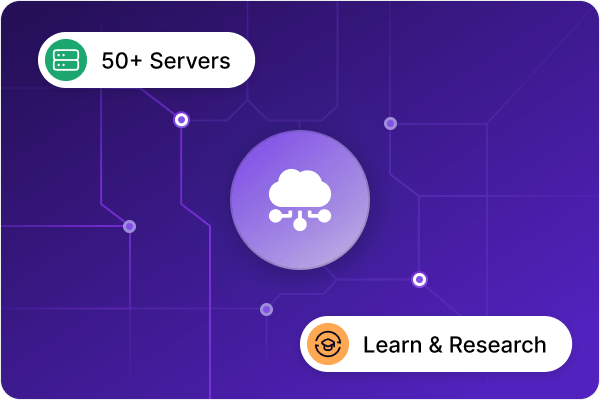
BUET CSE wanted to build that foundation on campus by transforming nearly 50 physical servers into an OpenStack-based private cloud for development, experimentation, AI workloads, and future-ready technology learning for students and researchers across emerging computing fields.
One Cloud, Many Possibilities
Students can move beyond fixed lab setups and work with computing environments created around what they are actually learning. From programming and databases to operating systems and cloud technologies, resources can be made available without configuring every computer separately.
This creates more freedom for practical courses, student projects, thesis work, and experimentation. Learners can build, test, make mistakes, start again, and understand how technologies behave in a real infrastructure environment rather than experiencing everything only through simulation or theory.
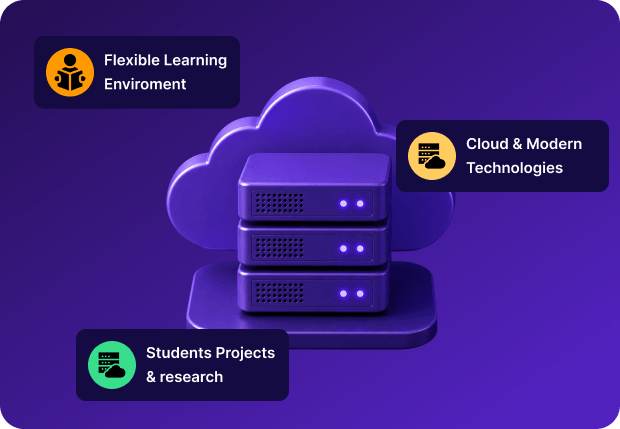
The same infrastructure can serve very different academic needs. Virtual machines, development environments, storage, networking, applications, and computing resources can be shared across students, faculty, and researchers instead of keeping physical servers dedicated to only one purpose.
That flexibility also opens doors for research, software development, AI and machine learning, data processing, cybersecurity labs, distributed systems, and other compute-intensive work. Resources can be assigned where they are needed, helping the department get more value from its available infrastructure.
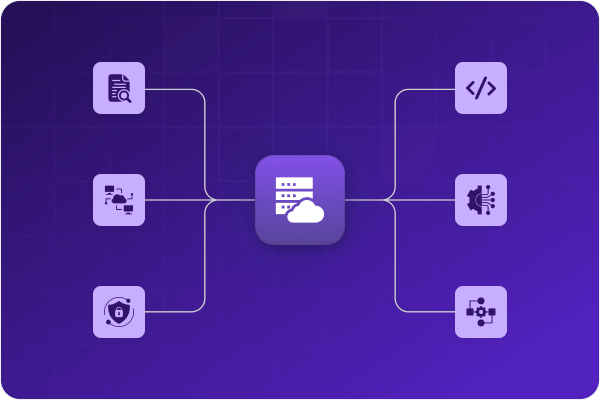
Nearly 50 servers working as one OpenStack private cloud give BUET CSE a foundation that can evolve with academic needs. New services and environments can be introduced over time without having to build separate infrastructure every time a new requirement appears.
More importantly, it gives future engineers a place to explore technologies they will encounter beyond university. Students can experience how modern computing infrastructure works firsthand, while researchers and faculty gain a flexible platform for developing ideas, running experiments, and exploring what comes next.
Designing BUET’s Private Cloud Platform
Physical Hardware Preparation
Our team prepared and optimized the underlying server infrastructure to support cloud operations.
Key activities included:
- Server readiness assessment
- Hardware configuration and validation
- Resource allocation planning
- Infrastructure preparation for virtualization workloads
The goal was to create a stable foundation capable of supporting future research requirements.
Network Integration and Configuration
A reliable cloud environment depends on strong networking architecture.
Our team implemented the required network configuration to enable communication between cloud components and provide secure resource access.
This included:
- Network design and integration
- Connectivity configuration
- Cloud networking setup
- Infrastructure-level optimization
The networking layer became the foundation for delivering isolated and flexible virtual environments.
Deployment of OpenStack-Based Cloud Services
We deployed a complete OpenStack-based private cloud platform, providing BUET with a flexible and scalable infrastructure environment.
The solution included:
- Single Sign-On Dashboard: Centralized access for managing cloud resources through a user-friendly interface.
- Image Service: Simplified creation and deployment of virtual machine environments.
- Compute Service: On-demand virtual machine provisioning for research and academic workloads.
- Networking Service: Flexible virtual network management and connectivity.
- Block Storage Service: Reliable persistent storage for applications and virtual machines.
- Container Infrastructure Management Service: Automated provisioning and lifecycle orchestration of container clusters.
- Database Service: Scalable, managed database provisioning supporting relational and non-relational engines.
- Instances High Availability Service: Automated recovery and host failover to maximize workload uptime.
- Load-Balancer Service: Intelligent traffic distribution across instances for optimal performance and redundancy.
- Object Storage Service: Scalable, highly available storage for unstructured data and large datasets.
- Orchestration Service: Template-driven automation for multi-tier cloud applications and resource provisioning.
- Shared File Systems Service: Coordinated multi-node shared storage volumes across virtual instances.
- Telemetry Alarming Services: Proactive infrastructure monitoring, performance metrics tracking, and automated alerting.
- More Related Services: Extensible modular platform capabilities to integrate future cloud tooling and microservices.
The OpenStack architecture provides BUET with greater control, scalability, and flexibility to support future research and innovation initiatives.
```The Outcome
A scalable research environment
Researchers can access computing resources according to project requirements.
Greater infrastructure independence
The university maintains greater control over its computing environment and resources.
Improved learning opportunities
Students gain practical exposure to modern cloud technologies.
A Platform for AI and Advanced Computing Research
AI development is not only about algorithms and models; it also depends on having the right foundation to experiment, test, and innovate. Researchers need reliable computing power, sufficient storage, and flexible environments where ideas can be transformed into practical solutions.
With BUET’s new private cloud platform, researchers can build and test AI models, create experimental environments faster, and support machine learning workflows without waiting for external infrastructure resources. This enables them to focus more on research and less on infrastructure limitations.
As AI continues to shape the future of engineering and technology, access to dedicated computing resources has become essential. By establishing its own cloud environment, BUET has created a stronger foundation for advanced research, experimentation, and the next generation of AI-driven innovation.

Modernize Public Services with Secure Government Cloud Solutions
Let your agency serve citizens while Cloud Omnium keeps infrastructure sovereign, secure, and audit-ready.